


Table of Contents
[Hide]
Understanding Minimalism and Textures
Minimalism focuses on simplicity, clean lines, and a clutter-free space. It uses the principle of ‘less is more’ to create a peaceful environment. But, many feel that minimalism can sometimes appear cold or uninviting. This is where textures come into play. Textures add warmth, depth, and character to minimalist designs. By incorporating different textures, you can bring life to your apartment while still keeping it simple and elegant.
Key Takeaways & Quick Overview
- Understanding Minimalism and Textures: Explore practical strategies and verified recommendations in the section below.
- Choosing the Right Textures: Explore practical strategies and verified recommendations in the section below.
- Layering Textures in Your Living Room: Explore practical strategies and verified recommendations in the section below.
In 2026, using textures is more than just a design choice; it is a way to express personal style. From soft fabrics to rugged materials, textures can transform dull spaces into welcoming environments. Think about how to balance different textures to avoid overwhelming the eye while still making a statement. The right combination can create harmony, making your minimalist apartment feel complete and inviting.
Choosing the Right Textures
When selecting textures for your minimalist apartment, consider your personal style and the overall theme of your space. Textures can be categorized into three main types: soft, hard, and natural. Soft textures include fabrics like cotton, linen, and velvet. These materials add comfort and warmth to your space. Hard textures include metals, glass, and wood. These provide structure and stability to your design. Natural textures, such as stone and plants, bring an organic feel, connecting your home to nature.
To achieve a balanced look, combine different textures. For example, if you have a sleek leather sofa, add a soft wool throw to create contrast. Similarly, pair a wooden coffee table with metal chairs to mix hard and soft elements. This balance is key in minimalist design. Always remember to keep your color palette simple, allowing the textures to shine. Bold colors can distract from the beauty of the textures you choose.
Layering Textures in Your Living Room
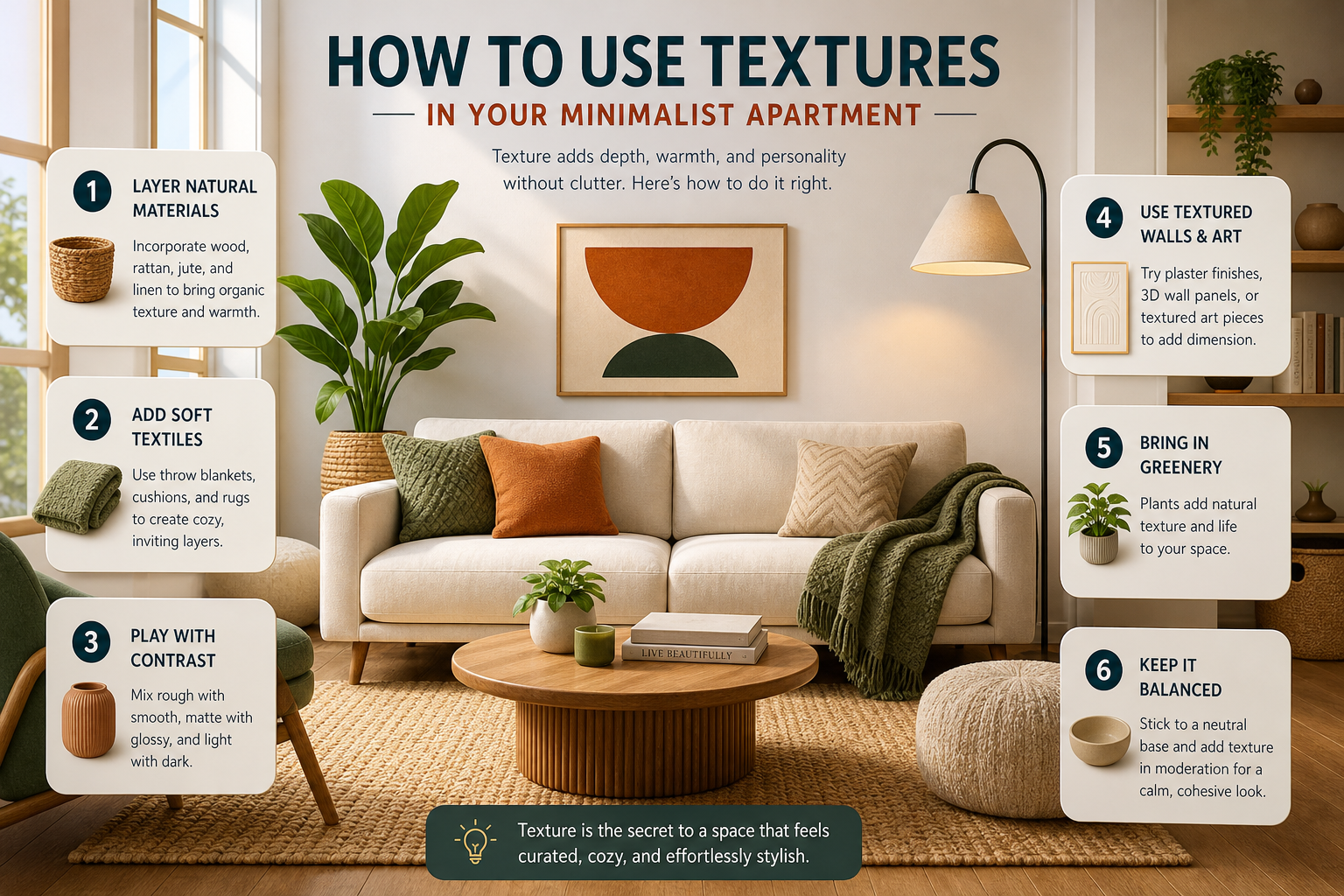
The living room is often the heart of a home, and it is essential to create a cozy atmosphere. Start with a neutral base, such as a light gray or beige sofa. Then, introduce various textures through cushions and throws. For instance, mix cotton and velvet cushions for a cozy yet stylish look. Layering different textures adds depth and interest to your living room.
Additionally, consider using rugs to define spaces and add warmth. A soft area rug can anchor your seating area and provide comfort underfoot. When selecting a rug, look for natural fibers like jute or wool. These materials are durable and add a touch of nature to your space. Also, think about incorporating textured wall art or a statement piece, like a woven blend. This can serve as a focal point while adding visual interest to your living room.
Incorporating Textures in the Bedroom
Your bedroom should be a sanctuary, a place for relaxation and rest. Textures play a important role in creating this calming environment. Start with your bedding. Layer different materials to enhance comfort. A cotton sheet set combined with a chunky knit blanket and soft down pillows creates a cozy and inviting bed. This layered look not only feels great but also adds visual interest.
Consider adding a textured headboard, such as one made from upholstered fabric or reclaimed wood. This feature can become a stunning focal point in your bedroom. Additionally, introduce soft drapes to frame your windows. Choose light materials that allow natural light to filter through, enhancing the overall serene atmosphere. Finally, don’t forget about the floor. A plush area rug can provide warmth and comfort, making your bedroom feel more inviting.
Using Textures in the Kitchen
The kitchen can also benefit from the use of textures. While it is often considered a functional space, adding textures can make it feel more inviting. Start with your countertops. If you have a sleek stone countertop, consider adding wooden cutting boards or ceramic bowls to introduce different textures. These elements not only serve a purpose but also enhance the visual appeal of the space.
Additionally, consider using textured tiles for your backsplash. A patterned tile can add character to an otherwise simple kitchen design. Combine this with metal hardware, such as brass or matte black finishes, to create a modern look. To finish, add textiles like linen dish towels or a textured table runner for your dining table. These small details can bring warmth and personality to your kitchen.
Textures in the Bathroom
The bathroom is often overlooked when it comes to design, but it can be a great place to play with textures. Start by choosing textured towels in various materials. For instance, fluffy cotton towels paired with a woven basket can add warmth and comfort to the space. Additionally, consider using a textured shower curtain to create a focal point. A fabric with a subtle pattern can soften the hard lines of your bathroom fixtures.
Incorporate natural elements, such as wooden accents or stone sinks, to bring an organic feel into your bathroom. These materials create a spa-like atmosphere, making your bathroom a relaxing retreat. Finally, add plants for a burst of color and life. Succulents or ferns can thrive in humid conditions, adding an extra layer of texture and freshness to the space.
Textured Decor and Accessories
Accessories are key to enhancing the texture in your minimalist apartment. Decorative items, such as vases, sculptures, and books, can add depth and interest to your spaces. Choose pieces with different textures, like a ceramic vase paired with a metal sculpture. This contrast makes for visually appealing arrangements. Also, consider using natural materials for your accessories, like woven baskets or clay pots. These items bring an organic touch that complements minimalist design.
Don’t forget about lighting. Textured lampshades or pendant lights can create warm, inviting lighting in your apartment. Choose fixtures made from fabrics or natural materials to add a layer of texture. Additionally, mirrors can enhance the feeling of space while reflecting different textures in your room. This can make your apartment feel larger and more dynamic.
Maintenance Tips for Textures
Once you have selected and incorporated textures into your minimalist apartment, it is essential to maintain them. Each material requires different care to keep it looking its best. For example, soft fabrics may need regular washing or steaming to remove wrinkles. Regular vacuuming of rugs and upholstery helps to keep them clean and fresh. Additionally, consider using fabric protectors to guard against stains.
Hard surfaces, like wood and stone, may require periodic polishing or sealing to maintain their beauty. Wipe down surfaces regularly with suitable cleaners. Be careful not to use harsh chemicals, as they can damage the finish. For natural elements, like plants, ensure they receive the right amount of light and water. Regular pruning and cleaning of leaves can help keep them healthy and vibrant.
Overall, a little maintenance goes a long way in keeping your minimalist apartment looking stylish and inviting. By following these tips, you can enjoy your textured spaces for years to come.