
Table of Contents
[Hide]
- Understanding Minimalist Design
- Choosing a Color Palette
- Furniture Selection
- Maximizing Vertical Space
- Incorporating Natural Light
- Decluttering Your Space
- Choosing the Right Decor
- Creating Zones in Open Spaces
- Textiles and Soft Furnishings
- Smart Technology Integration
- Personalizing Your Space
- Maintaining a Minimalist Lifestyle
Understanding Minimalist Design
Minimalist design focuses on simplicity and functionality. It is about creating spaces that feel open and airy, allowing for ease of movement and clarity of thought. A minimalist approach reduces clutter and uses fewer items, which can be especially beneficial in small urban apartments. By focusing on essential elements, you can make your space feel more spacious and organized. This design style emphasizes clean lines, neutral colors, and functional furniture.
Key Takeaways & Quick Overview
- Understanding Minimalist Design: Explore practical strategies and verified recommendations in the section below.
- Choosing a Color Palette: Explore practical strategies and verified recommendations in the section below.
- Furniture Selection: Explore practical strategies and verified recommendations in the section below.
In a city environment, where space can be limited, minimalist design becomes even more relevant. It allows you to create a peaceful retreat amidst the hustle and bustle of urban life. Moreover, minimalist design encourages you to choose quality over quantity. This means selecting pieces that serve a purpose and enhance your living experience.
Choosing a Color Palette
Color choice is critical in minimalist design. A well-thought-out color palette can make a small space feel larger and more cohesive. Consider using neutral colors such as whites, grays, and beiges. These colors reflect light and create a sense of openness. You can also add soft pastels for a touch of warmth and personality.
When integrating colors, use a limited palette. Select two to three main colors and stick to them throughout your apartment. This creates visual harmony. For instance, if you choose white, gray, and light blue, apply these colors to your walls, furniture, and decor items. Accent colors can be introduced through plants, artwork, or decorative pillows, but keep them minimal to maintain the overall aesthetic.
Furniture Selection
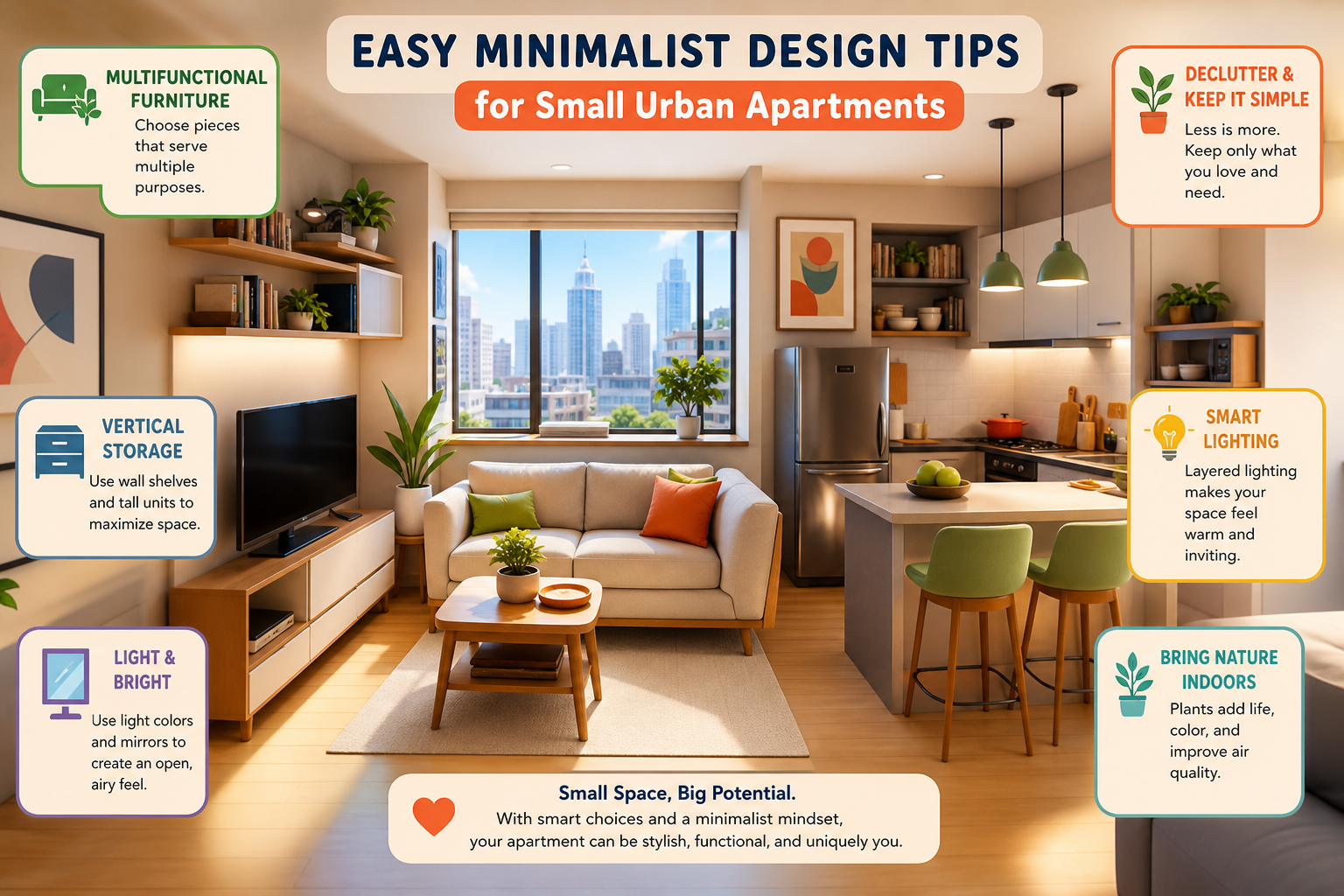
When it comes to choosing furniture for a small apartment, opt for multi-functional pieces. A sofa bed or a coffee table with storage can help maximize your space. Look for furniture that is proportionate to your room size. Oversized furniture can make a room feel cramped, while smaller items can create a more open environment.
Additionally, consider furniture with clean lines and simple shapes. Avoid ornate designs that can overwhelm a small space. For instance, a sleek dining table with minimalist chairs can provide function without crowding the area. Remember, the goal is to keep things simple while ensuring that every piece serves a purpose.
Maximizing Vertical Space
In small apartments, vertical space is often underutilized. Make the most of your walls by adding shelves. Floating shelves can display books, plants, or decorative items without taking up valuable floor space. This strategy not only provides storage but also adds personality to your walls.
Consider tall bookshelves or cabinets that draw the eye upward. This creates an illusion of height and opens up the floor area. Additionally, utilize hooks for hanging items like coats or bags, which keeps your space tidy. By focusing on vertical solutions, you can enhance the functionality of your apartment without compromising on style.
Incorporating Natural Light
Natural light is essential in minimalist design. It enhances the feeling of spaciousness and creates a tranquil environment. To maximize natural light, use sheer curtains or blinds that can be easily drawn open. This allows sunlight to flood in during the day, brightening your space.
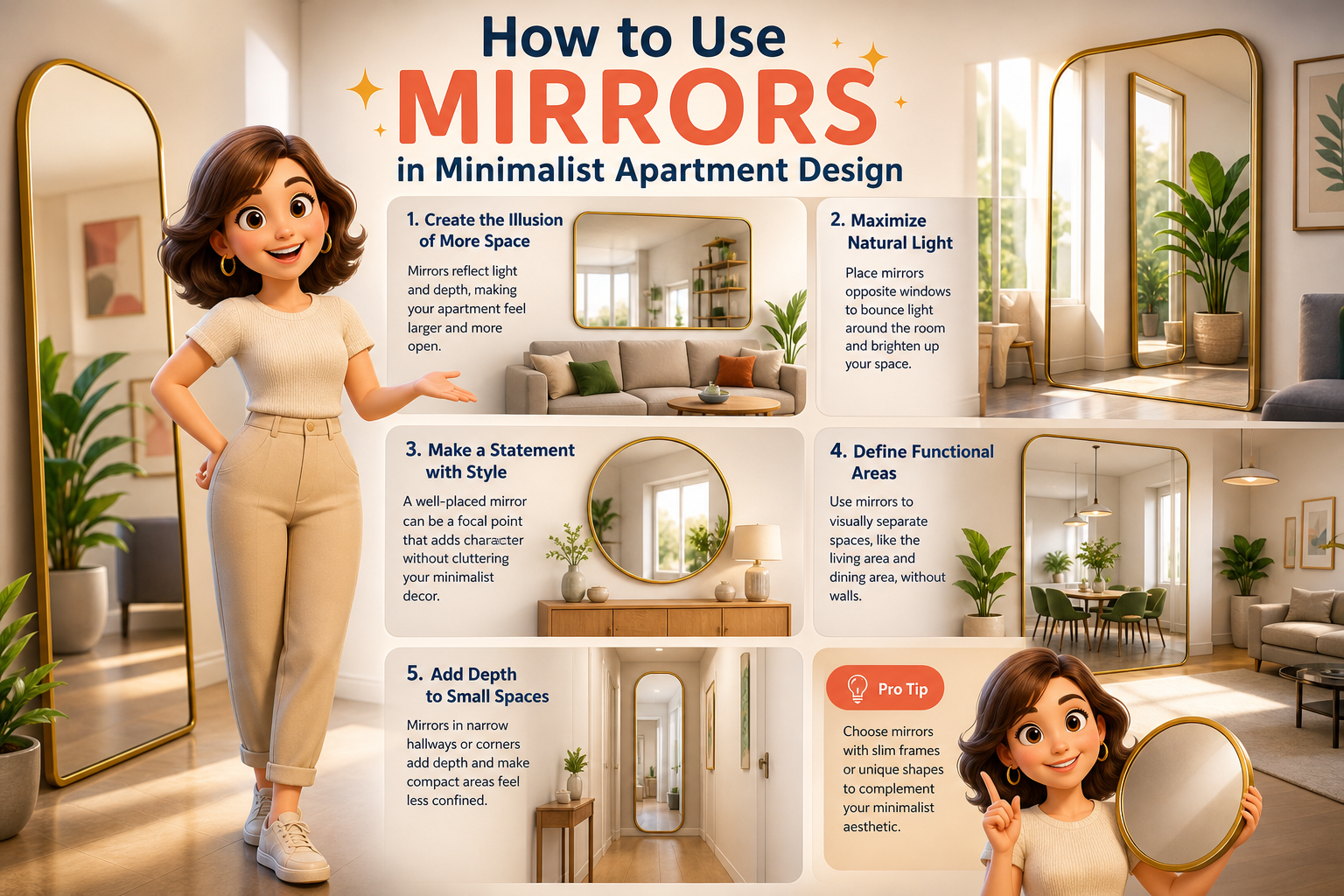
Reflective surfaces can also help amplify light. Consider using mirrors strategically placed across from windows. This creates depth and reflects light, making your space appear larger. Additionally, avoid heavy furniture or dark colors that absorb light. Instead, opt for lighter materials and finishes to keep your apartment feeling airy.
Decluttering Your Space
Decluttering is a fundamental aspect of minimalist design. Start by evaluating your belongings and removing items that do not serve a purpose. A good rule of thumb is to keep only what you love and use regularly. This creates physical and mental space in your apartment.
Utilize storage solutions that blend seamlessly into your design. For example, consider under-bed storage boxes or decorative baskets that can hold items discreetly. Regularly reassess your belongings to maintain a clutter-free environment. By committing to decluttering, you can enjoy a serene and organized living space.
Choosing the Right Decor
In minimalist design, every decor item should have significance. Select artwork and decorations that reflect your personality but avoid overcrowding your walls. A single large piece of art can make a bold statement without overwhelming the space.
Plants can also be an excellent addition to your decor. They bring life and color into your apartment while improving air quality. Choose low-maintenance plants like succulents or snake plants that fit into your minimalist theme. Remember, the goal is to keep decor simple, so only include items that resonate with you and enhance your living experience.
Creating Zones in Open Spaces
In many small urban apartments, open floor plans are common. To create functional areas, use rugs or furniture placement to define spaces. For example, a rug can delineate a living area from a dining area, helping each zone feel distinct.
Additionally, consider using room dividers or bookcases to separate spaces without closing them off. This allows for privacy while maintaining an open feel. Creating zones helps in organizing your activities, making your apartment more functional and enjoyable to live in.
Textiles and Soft Furnishings
Textiles play a vital role in minimalist design. Choose soft furnishings that are comfortable yet simple. Opt for neutral or monochromatic cushions, throws, or rugs that complement your color palette. These elements add warmth and texture without overwhelming the space.
Layering textiles can also create depth. For instance, you can mix a soft area rug with textured throws on your sofa. This adds visual interest while keeping the overall look streamlined. Remember, the key is to choose quality textiles that enhance comfort and style in your urban apartment.
Smart Technology Integration
In 2026, smart technology can significantly enhance your living experience in small apartments. Consider integrating smart home devices that are sleek and unobtrusive. Smart lighting solutions allow you to adjust brightness and color temperature, creating the perfect ambiance.
Smart speakers can help manage your daily routines while blending seamlessly into your decor. Choose devices that are compact and stylish. This technology not only adds convenience but also aligns with the minimalist aesthetic, keeping your space organized and efficient.
Personalizing Your Space
While minimalism emphasizes simplicity, personal touches are essential for making a space feel like home. Incorporate personal items that tell your story, such as travel souvenirs or family photos. However, display them thoughtfully to avoid clutter.
Consider a gallery wall with a few selected pieces of art or photographs. This adds character without overwhelming your minimalist design. Additionally, personalizing your apartment creates emotional connections to your space, making it more inviting and enjoyable.
Maintaining a Minimalist Lifestyle
Adopting a minimalist design is not just about aesthetics; it is also about lifestyle. Commit to a mindset of simplicity. Regularly review your belongings and avoid acquiring new items that do not serve a purpose. This helps you maintain a clutter-free environment.
Practice mindfulness in your purchasing decisions. Before buying something new, ask yourself if it truly adds value to your life. By embracing a minimalist lifestyle, you can enjoy the benefits of a serene and organized urban apartment, allowing you to focus on what truly matters.